 Whatsapp:+8613811510145
 xhmineral@xinhaimining.com

Article Summary: A mineral processing laboratory provides key testing, analysis and research services for mining projects. It conducts various tests like sample preparation, grindability, gravity separation, flotation and leaching, with clear procedures to ensure data accuracy. Its test reports include ore composition, optimal grinding size, beneficiation flowsheets and recovery rates, providing strong support for project design, equipment selection and cost control, reducing investment risks. Xinhai’s CNAS-certified laboratory offers professional tests for various minerals, with formal reports and customized solutions, helping mining projects achieve stable, efficient operation.
2026-04-24 XinHai (views 612)
A mineral processing laboratory offers key testing, analysis, and research services. These services are critical for mining projects—before, during, and after design, construction, and operation alike.
You’ll need its services in several common scenarios. For example, when evaluating a new ore deposit, planning a new processing plant, upgrading an old facility, or trying to boost recovery rates and cut costs.
Without professional laboratory support, projects often run into problems. These include unreasonable beneficiation flowsheets, mismatched equipment, low recovery rates, and high investment risks.
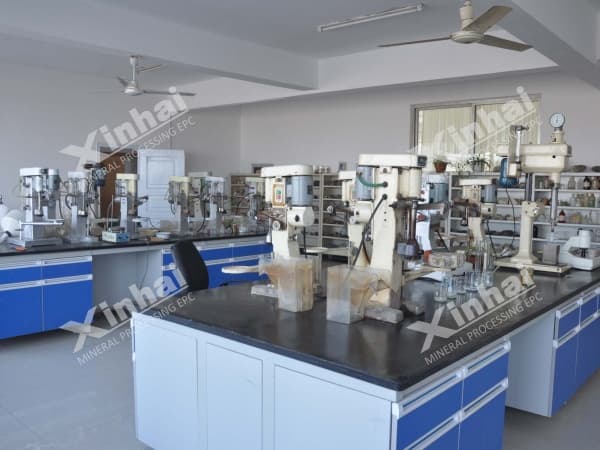
A mineral processing laboratory is a professional institution. It comes with standard instruments, skilled technicians, and a complete analysis system.
Its main work is to conduct ore characterization, beneficiation tests, process optimization, and data analysis. Through these steps, it determines the ore’s beneficiability, the best processing flowsheet, and reliable technical indicators.
In short, it serves as the technical foundation for mining investment, plant design, and production improvement.
Mineral processing laboratories conduct a variety of tests. The most common ones are listed below:
Sample preparation and mineral characterization
Grindability and crushing tests
Gravity separation tests
Magnetic separation tests
Froth flotation tests
Leaching tests (cyanidation, acid leaching, etc.)
Solid–liquid separation and sedimentation tests
Closed-circuit process and semi-industrial pilot tests
Each test follows a clear, step-by-step process. Here’s a breakdown of the basic steps for most tests:
Sample preparation: Crush, grind, sieve, and homogenize the ore sample. This step is vital to ensure the sample is representative of the entire ore deposit.

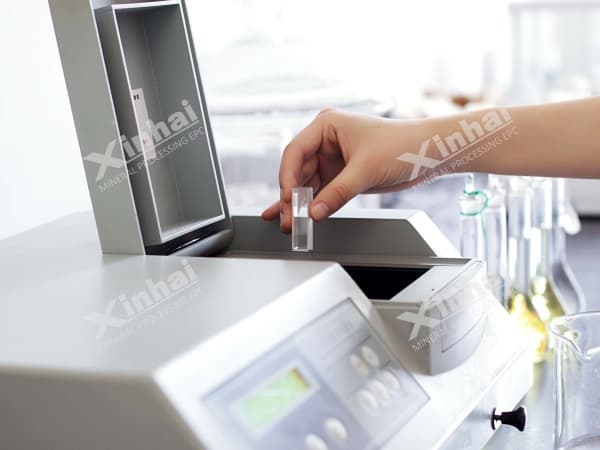
Mineral and chemical analysis: Test the ore to determine its mineral composition, major elements, grade, grain size, and structure.
Exploratory tests: Identify feasible beneficiation methods. These usually include gravity separation, flotation, magnetic separation, or leaching.
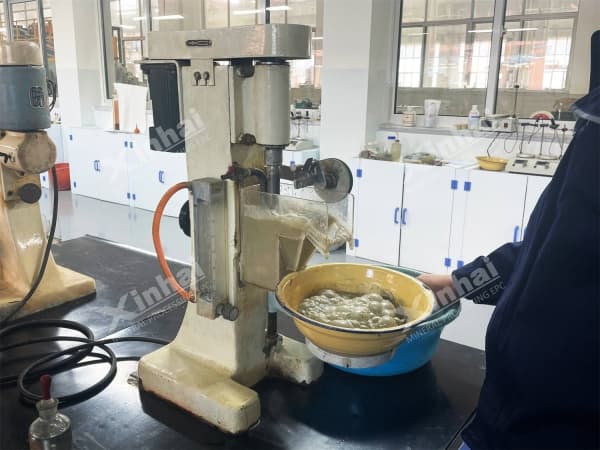
Conditional tests: Optimize key parameters. These parameters include grinding fineness, reagent dosage, pulp concentration, reaction time, and pH value.
Open-circuit and closed-circuit tests: Verify that the processing flowsheet is stable. These tests also help obtain formal technical indicators.
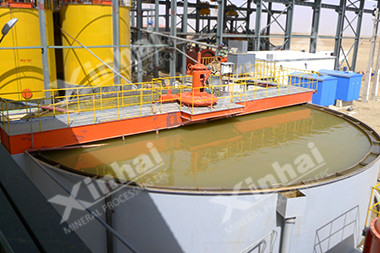
Sedimentation and dewatering tests: Provide a basis for selecting dewatering equipment for concentrates and tailings.
Report compilation: Summarize all key information. This includes the flowsheet, parameters, concentrate grade, recovery rate, and professional suggestions.
A complete test report includes several key pieces of information. These are:
Ore properties and multi-element analysis
Optimal grinding size
Recommended beneficiation flowsheet
Concentrate grade, recovery rate, and yield
Tailings grade and sedimentation index
Basis for equipment selection
These data are extremely valuable for mining projects. They support feasibility studies, plant design, equipment selection, investment estimation, and production optimization. Most importantly, they greatly reduce project risks.
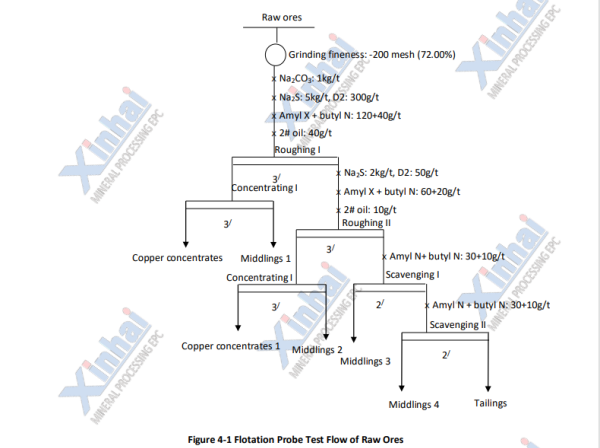
Mineral-processing-test-flow-chart
A mineral processing laboratory is the core technical support for mining projects. It clarifies the ore’s properties and determines a reliable processing flowsheet and indicators.
It ensures that project design and operation rely on data, not just experience. For new mines, expansions, and retrofits, it is absolutely indispensable.
Q1: Why are mineral processing tests necessary?
Mineral processing tests reveal the ore’s characteristics. They help confirm the best flowsheet, achieve high concentrate grade and recovery rate, and reduce costs. They also avoid investment risks caused by blind design.
Q2: What is the purpose of a mineral processing laboratory?
Its main purpose is to provide accurate data, reliable processes, and professional solutions. These help mining enterprises convert ore resources into economic benefits efficiently and safely.
Xinhai Mining operates an advanced, CNAS-certified mineral processing laboratory. It has a professional technical team, complete test equipment, and rich global project experience.
We provide reliable tests for more than 70 minerals. These tests cover flotation, gravity separation, magnetic separation, leaching, and other processes.
We deliver formal test reports, optimized flowsheets, and customized EPC solutions. If you need ore tests, process design, or plant upgrading, contact Xinhai via WhatsApp: +8613811510145.
As an efficient mineral processing technology, gold flotation technology plays an important role in modern gold extraction. It separates gold minerals from complex ores through physical and chemical methods to recover gold. With the increasing complexity and depletion of gold resources, flotation technology has become one of the most commonly used methods in gold extraction due to its high efficiency and flexibility. This article will comprehensively explore the principles and processes of gold flotation technology, aiming to provide a systematic reference for relevant practitioners and researchers.
In mineral processing plant construction, steel structure buildings have become the industry’s widely recognized mainstream choice. Compared with traditional reinforced concrete structures, steel structures offer significant advantages in construction speed, overall cost control, on-site construction complexity, and future expansion or relocation. This is especially evident in regions such as Africa, where steel structure plants have effectively become the standard configuration. Whether building a new concentrator or expanding an existing facility, most mining companies prioritize steel structures to achieve faster commissioning, better cost control, and smoother project delivery.






 Whatsapp:+8613811510145
  xhmineral@xinhaimining.com
  Online Inquiry

 Get Quote
 Online Inquiry
 Leave Message
 Send Email

 Consult
 Message
 Email
Email
 Whatsapp
